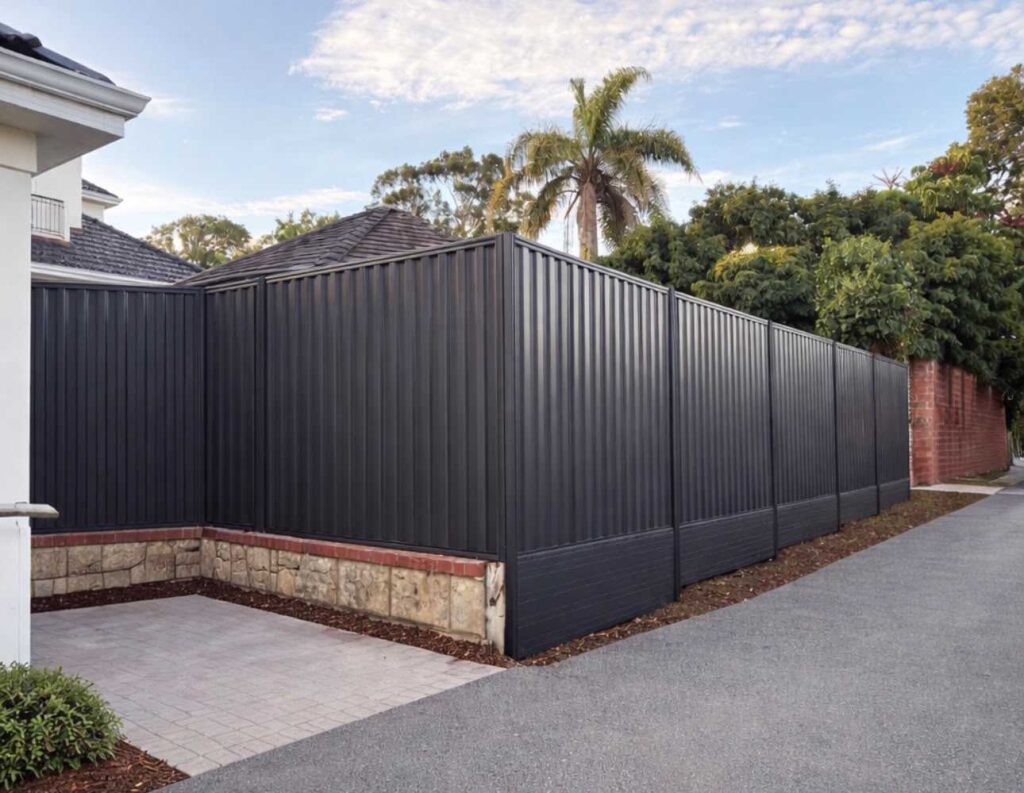
A fence does far more than mark a boundary. It protects your family, secures your pets, adds privacy and lifts the value of your property. Yet most homeowners only start researching fencing services once an old fence falls over or a new pool needs a compliant barrier. That reactive approach often leads to rushed decisions and higher costs.
This guide walks you through every major fencing service available today. You will learn what each fencing type offers, how much you can expect to pay, which rules apply in your state and how to choose a contractor who finishes the job properly the first time. Whether you need a simple boundary fence, a pool safety barrier or a full commercial fencing project, this article gives you the information to make a confident decision.
We service the Perth metro area at Fencing on a Budget, so several examples below reference Western Australian rules. If you live elsewhere, check your local council or state building authority for equivalent regulations before you start any fencing project.
What Are Fencing Services
Fencing services cover the design, supply, installation, repair and maintenance of boundary structures around residential, commercial and industrial properties. A fencing company typically handles the entire process. That includes measuring the site, recommending suitable materials, obtaining any required permits, installing posts and panels, and finishing the job with gates, latches or safety features.
Modern fencing services extend well beyond a simple timber paling fence. Today a homeowner can choose from Colorbond steel, aluminium slats, timber pinelap, pool safety barriers, decorative bollards and even cladding solutions that double as a fence. Each option suits a different budget, climate and purpose.
Search engines and voice assistants increasingly treat “fencing services near me” as a local intent query. That means a strong fencing guide needs to answer specific questions clearly. People ask things like “how much does a Colorbond fence cost” or “do I need a permit for a pool fence.” We answer those questions directly throughout this guide and again in the FAQ section near the end.
Why Your Choice of Fence Matters
Before comparing fencing types, it helps to understand what a fence actually needs to achieve for your property.
A good fence performs several jobs at once. It defines your boundary so neighbours and visitors know where your property starts and ends. It keeps children and pets inside a safe area. It blocks unwanted access from the street or a laneway. It reduces noise from traffic or neighbouring properties. It also plays a major role in how your home looks from the street, which affects resale value.
Choosing the wrong fence type for your climate or purpose often leads to early repairs. Coastal properties need corrosion resistant materials. Homes near bushland need fencing that meets local fire rules. Pools always need a compliant safety barrier regardless of location. Matching the fence to its purpose from the start saves money over the life of the fence.
Types of Fencing Services Available in Your Area
Below is a breakdown of the fencing services most commonly requested by homeowners and businesses. Each section explains what the service involves, who it suits and what it typically costs.
Colorbond Fencing
Colorbond fencing uses pre painted steel sheets fixed to steel posts and rails. It has become one of the most requested fencing services in Australia because it combines strength, low maintenance and a clean modern look.
Colorbond panels resist termites, rot and fire far better than timber. The factory applied coating also resists fading and chipping for many years, even in harsh sun. Homeowners can choose from a wide range of colours to match their home’s exterior, and the panels come in different heights to suit privacy or boundary needs.
A standard Colorbond fence install involves setting steel posts in concrete footings, then fixing horizontal rails and vertical steel sheets between the posts. Most residential jobs finish within a few days depending on the length of the fence and site access.
You can view examples and request pricing through our Colorbond fencing service page.
Pinelap Timber Fencing
Pinelap fencing remains popular for buyers who want a natural timber look at an affordable price. It uses horizontal timber slats fixed between timber or steel posts, giving a classic rural or cottage style appearance.
Timber fencing suits properties where budget matters most, or where the owner wants a softer, more traditional look than steel offers. Pinelap fences do require more upkeep than Colorbond. Owners typically need to reseal or repaint the timber every few years to protect it from weather damage and insects.
Storm damage and general wear are the most common reasons homeowners replace pinelap fencing. If your existing timber fence has started leaning, splitting or losing slats, a full or partial pinelap replacement is usually more cost effective than repeated patch repairs. Learn more on our Pinelap fencing service page.
Aluminium Slat Fencing
Aluminium slat fencing has grown quickly in popularity because it blends the clean lines of a modern fence with the airflow and light that timber slats cannot always match. The slats run vertically or horizontally and can be spaced to control privacy while still allowing air and light through.
This fencing type resists rust completely, which makes it a strong choice for coastal properties or pool surrounds where moisture exposure is constant. Aluminium also needs almost no maintenance beyond an occasional wash, since it will not rot, warp or attract termites.
Many homeowners choose aluminium slat fencing for feature areas such as front entries, alfresco screening or side boundaries that need a premium finish. Full details sit on our Aluminium slat fencing page.
Pool Safety Fencing
Pool safety fencing is not optional. Every state in Australia requires a compliant barrier around any pool, spa or portable pool holding more than 300mm of water. The barrier must stop young children from gaining unsupervised access, and it must meet specific technical standards covering height, gaps, climbable objects and self closing gates.
A pool fence typically pairs a durable material such as aluminium slats or glass panels with a self closing, self latching gate. Councils inspect pool barriers periodically, and a non compliant barrier can result in fines or an order to fix the fence immediately.
Because the safety of children depends on this fence performing correctly every single time, we strongly recommend using an experienced fencing contractor for any pool barrier installation rather than attempting a DIY build. Building and Energy WA publishes a practical checklist that homeowners can use to confirm their pool barrier stays compliant, available through the official pool safety barrier checklist.
You can request a quote for a compliant pool fence through our pool safety fencing service page.
Bollards
Bollards protect property, vehicles and pedestrians by physically blocking vehicle access to a set area. Businesses commonly install bollards outside shopfronts, loading docks, driveways and pedestrian walkways to prevent accidental or deliberate vehicle intrusion.
Bollards come in fixed, removable and retractable styles. Fixed bollards suit permanent protection zones. Removable bollards suit areas that occasionally need vehicle access, such as a courtyard used for deliveries on specific days. Retractable bollards give the most flexibility for sites that switch between pedestrian and vehicle use throughout the day.
Read more about commercial and residential bollard installation on our bollards service page.
Indoor and Outdoor Cladding
Cladding has become a popular addition to fencing projects because it upgrades the appearance of a boundary or exterior wall while adding a protective layer against weather. Cladding panels attach to an existing structure or a new frame, creating a finished surface that can mimic timber, stone or a smooth contemporary panel look.
Many homeowners pair cladding with a new fence to create a consistent look across a front wall, letterbox and boundary fence. Businesses also use cladding to refresh tired exterior walls without a full rebuild. Details on materials and finishes sit on our indoor and outdoor cladding page.
Battery Cover Installation
Home battery systems need protection from direct sun, rain and accidental knocks. A battery cover shields the unit while keeping it accessible for maintenance and airflow. This service pairs naturally with a fencing project since the cover often attaches near the boundary fence or a side access area.
See current options and starting prices on our battery cover installation page.
How to Choose the Right Fencing Contractor Near You
Picking the right contractor matters just as much as picking the right fence type. A poorly installed fence fails early regardless of how good the materials are. Use the following checks before you commit to a quote.
Check how long the company has operated in your area. A contractor with over a decade of local experience understands local soil conditions, council requirements and weather exposure far better than a business that recently started.
Ask to see completed projects, ideally with before and after photos from real jobs. Our gallery shows recent installations across the Perth metro area so you can see finish quality before you book a quote.
Confirm the contractor provides a written quote that lists materials, labour, post depth, footing type and an estimated completion date. Vague verbal quotes often lead to disputes once the job starts.
Ask whether the price includes removal and disposal of your old fence. Many quotes exclude this step, which then becomes an unexpected extra cost.
Read reviews from real customers and look for consistent themes around communication, punctuality and finish quality rather than a single glowing review that sounds generic.
Finally, ask how the company handles warranty claims. A trustworthy fencing contractor stands behind their work and will return to fix any genuine installation fault at no extra charge.
Factors That Affect Fencing Costs
Fencing quotes vary widely because several factors combine to set the final price. Understanding these factors helps you compare quotes fairly rather than simply picking the cheapest number.
Material choice has the biggest impact on price. Timber pinelap generally costs less per metre than Colorbond steel, while aluminium slats and glass pool fencing sit at the premium end due to material and fabrication costs.
Fence length and height directly affect both material quantity and labour time. A taller fence needs deeper post footings for stability, which adds to excavation and concrete costs.
Site access and ground conditions change installation difficulty. Rocky or clay heavy ground takes longer to dig, and sites with poor vehicle access may require materials to be carried in manually, adding labour time.
Removal of an existing fence adds cost if your old fence needs to come down and be disposed of before the new one goes up.
Gates and hardware such as pedestrian gates, driveway gates, self closing hinges and pool compliant latches all add to the total price depending on how many you need.
Council permits may apply depending on fence height, location and your local planning rules. Some councils require approval for fences over a certain height on street facing boundaries.
Getting a detailed, itemised quote lets you see exactly where your budget goes and makes it far easier to compare multiple contractors on a like for like basis. You can request a free, no obligation quote through our get a free estimate page.
Fencing Regulations and Legal Requirements
Fencing sits under specific legislation in most Australian states, and ignoring these rules can lead to disputes, fines or forced removal of a non compliant structure.
Dividing Fence Rules
In Western Australia, the Dividing Fences Act 1961 governs how neighbours share responsibility for a boundary fence. In general, adjoining owners share the reasonable cost of building or repairing a dividing fence, and one owner cannot force a specific expensive fence type onto a neighbour without agreement. Disputes that cannot be resolved directly between neighbours typically go through the Magistrates Court. You can read the official state guide on dividing fences through the Western Australian Government dividing fences guide.
If you share a boundary fence project with a neighbour, put the agreement in writing before work starts. Note the fence type, height, cost split and who is responsible for gate access. This simple step prevents the majority of neighbour fencing disputes.
Pool Fencing Compliance
As covered earlier, every pool, spa and portable pool over 300mm deep legally requires a compliant safety barrier. Requirements typically cover minimum fence height, maximum gap sizes, removal of climbable objects near the barrier and self closing, self latching gates. Local councils inspect pool barriers on a regular cycle and can issue penalties for non compliance. Always confirm current requirements with your local council or state building authority before finalising your pool fence design.
Height and Boundary Restrictions
Many councils cap fence height on street facing boundaries, often around 1.2 metres, to preserve sightlines for traffic and pedestrians. Side and rear boundary fences usually allow greater height, commonly up to 1.8 metres, though this varies by council. Always check local planning rules before committing to a fence height, particularly for corner blocks where visibility rules often apply on both street facing sides.
The Fence Installation Process Step by Step
Understanding what happens during installation helps you plan around the work and know what to expect from your contractor.
Site assessment and measurement. The contractor visits your property, measures the boundary, checks ground conditions and notes any obstacles such as trees, slopes or underground services.
Design and material selection. You choose the fencing type, height, colour and any gates or additional features based on your budget and purpose.
Quote and agreement. The contractor provides a written quote covering materials, labour, timeframe and payment terms. Once you approve the quote, the job gets scheduled.
Permits if required. If your council requires approval for the fence height or location, the contractor arranges or advises on this step before installation begins.
Old fence removal. If applicable, the existing fence comes down and is removed from site.
Post installation. Posts get set at measured intervals and secured with concrete footings dug to the correct depth for your soil type and fence height.
Panel or rail fixing. Once footings cure, the contractor fixes rails and panels, sheets or slats between the posts, checking alignment and level throughout.
Gates and hardware. Any gates get hung and fitted with the correct hinges, latches and locks, including compliant self closing hardware for pool barriers.
Final inspection and clean up. The contractor checks the finished fence for straightness, secure fixings and overall finish, then clears offcuts and debris from site.
Most residential fencing projects complete within one to five days depending on length and complexity. Larger commercial or subdivision projects take longer and often run in stages.
Fence Maintenance Tips That Extend Its Life
A well built fence still needs basic upkeep to reach its full lifespan. The following tips apply across most fencing materials.
Inspect posts and footings twice a year for movement, cracking or rot at ground level, since this is where most structural failures begin.
Clear vegetation, mulch and soil buildup away from the base of timber posts to reduce moisture retention and insect access.
Wash Colorbond and aluminium panels with water and a soft brush every few months to remove salt spray, dust and grime, particularly on coastal properties.
Reseal or repaint timber fencing every two to three years, or sooner in harsh sun exposure, to protect against splitting and rot.
Check gate hinges and latches regularly, especially on pool fences, since a sagging gate that fails to self close creates a serious safety risk.
Tighten loose fixings as soon as you notice movement rather than waiting for a full panel to come loose, since small repairs cost far less than major fixes.
Signs You Need Fence Repair or Replacement
Recognising fence damage early saves money and prevents small issues from becoming safety hazards. Watch for these warning signs.
Leaning posts usually indicate a failing footing, which typically means the post needs to be reset in fresh concrete rather than simply straightened.
Cracked or split timber panels let moisture in, which accelerates rot and weakens the whole section over time.
Rust spots on steel fencing, especially around cut edges or fixing points, signal that the protective coating has failed in that area.
Gaps under or between panels reduce both security and privacy, and on pool fences these gaps may fail compliance requirements.
A gate that no longer closes and latches properly on its own is a safety issue on any pool fence and should be repaired immediately.
Storm damage such as fallen branches or wind lifted panels often causes hidden structural stress even when the fence still looks mostly intact, so a professional inspection after severe weather is worthwhile.
If you notice any of these signs, book an inspection before the damage spreads further along the fence line. Our team can assess whether a repair or a full section replacement makes more financial sense for your situation.
Residential Versus Commercial Fencing Services
While the core installation process stays similar, residential and commercial fencing projects differ in scale, priorities and compliance requirements.
Residential fencing usually focuses on privacy, security for children and pets, and street appeal. Homeowners often prioritise appearance alongside function, which is why Colorbond colours and aluminium slat spacing get chosen carefully to match the home’s exterior.
Commercial fencing prioritises security, access control and durability under heavier use. Businesses often need bollards to protect entrances, taller boundary fencing to secure stock or equipment, and fencing that can withstand higher foot and vehicle traffic without frequent repairs.
Subdivision and new development fencing sits between the two, often requiring a consistent fence style across many lots, coordinated scheduling with builders and compliance with the developer’s design guidelines.
Whatever the scale, a contractor experienced across both residential and commercial work brings efficiency and consistency that smaller, less experienced teams often struggle to match.
Sustainability and Choosing Materials for Harsh Climates
Western Australia’s climate places real demands on fencing materials. Strong sun exposure, salt air near the coast and occasional severe storms all shorten the life of a poorly matched fence.
Steel fencing such as Colorbond resists UV fading and termite damage far better than timber, making it a strong long term choice for sun exposed boundaries. Aluminium performs exceptionally well in coastal areas because it will not rust, unlike untreated steel fittings.
Timber fencing remains a renewable and often more affordable option, but it performs best when properly sealed and kept away from constant moisture at ground level. Choosing timber for a sheltered area rather than full sun exposure extends its working life considerably.
Matching material choice to your specific site conditions, rather than choosing purely on upfront price, usually delivers better value over the full lifespan of the fence.
Why Choose a Local, Experienced Fencing Team
Local experience matters more in fencing than in many other trades because soil conditions, wind exposure and council rules vary significantly even within the same city.
Fencing on a Budget has serviced the Perth metro area for over sixteen years, working across homes, businesses and new developments. Our team measures every site carefully, sets posts to the correct depth for local soil conditions and finishes every job with the same attention to detail regardless of project size.
We believe a fencing company earns trust through consistent workmanship and honest communication rather than the lowest possible price alone. That approach is why so many of our customers come back for additional fencing work or refer us to neighbours and family.
If you are ready to move forward, request a free, no obligation quote through our get a free estimate page. Our team will assess your site, discuss the fencing type that suits your needs and provide a clear written quote with no pressure to commit on the spot.
Common Fencing Mistakes to Avoid
Even a straightforward fencing project can go wrong when a few common mistakes creep in. Knowing these pitfalls in advance helps you avoid unnecessary cost and delay.
Skipping a written quote. A verbal price agreement leaves too much room for confusion once the job starts. Always insist on a written quote that lists materials, dimensions, post depth and total price before work begins.
Choosing the cheapest option without checking inclusions. A very low quote sometimes excludes removal of the old fence, site cleanup or council permit costs. Compare quotes line by line rather than by the bottom number alone.
Ignoring soil and drainage conditions. Posts set in poor draining soil without adequate footing depth are far more likely to lean or shift within a few years. A contractor who understands local ground conditions sets posts correctly the first time.
Underestimating pool fence compliance. Some homeowners treat a pool barrier as a standard fence and miss specific requirements around gate self closing hardware or gap sizes. Non compliance can lead to fines and, more importantly, creates a genuine safety risk for young children.
Forgetting to check boundary lines. Building a fence slightly over the true boundary line can create a legal dispute with a neighbour later, even if the mistake was unintentional. A quick boundary check before installation avoids this problem entirely.
Not discussing shared costs with a neighbour early. For dividing fences, reaching an agreement with your neighbour before work starts prevents disputes over cost sharing and fence style further down the track.
Questions to Ask Before You Book a Fencing Quote
A short conversation before booking a full quote can save significant time and money. Consider asking the following questions when you first contact a fencing company.
Ask how many years the business has operated in your specific area, since local experience affects everything from soil knowledge to council familiarity.
Ask whether the quoted price is fixed or subject to change once work begins, particularly around unexpected ground conditions.
Ask what warranty applies to both materials and workmanship, and get the warranty terms in writing.
Ask for an estimated start date and completion timeframe so you can plan around the work, especially if pets or young children use the yard during installation.
Ask whether the company handles permit applications on your behalf or whether that responsibility sits with you.
Ask to see recent examples of the exact fencing type you are considering, ideally from a similar sized property in your suburb.
How Fencing Services Improve Property Value
A new or well maintained fence contributes more to property value than many homeowners expect. Real estate agents consistently note that street appeal influences a buyer’s first impression before they even step through the front door, and a clean, straight fence sets that first impression firmly.
Beyond appearance, buyers actively look for signs of low maintenance living. A durable material such as Colorbond or aluminium signals to a potential buyer that they will not face an expensive fence replacement shortly after moving in. A compliant, well built pool fence also reassures buyers with young families that safety has already been addressed properly.
For rental properties, a secure and attractive fence reduces vacancy periods and supports higher achievable rent, since tenants place real value on privacy and security. For commercial properties, well maintained boundary fencing and bollards signal a professionally managed site, which matters to both customers and potential business tenants.
Investing in quality fencing services therefore delivers a return that extends beyond daily function, supporting both the resale value and the ongoing appeal of the property.
Seasonal Timing for Fencing Projects
Timing your fencing project around the seasons can affect both installation speed and long term durability. In Perth and across most of Western Australia, drier months make ground conditions easier to work with, which generally speeds up post hole digging and footing curing.
Booking ahead of summer also means your pool fence or privacy fence is ready before peak outdoor season begins, giving you full use of your yard when you need it most. Booking fence repairs promptly after a storm prevents further movement or damage while you wait, since a fence already weakened by wind or fallen debris can deteriorate quickly if left unaddressed.
Demand for fencing services tends to rise heading into the warmer months, so booking your quote and installation date early gives you more flexibility around scheduling and reduces the chance of a lengthy wait for a fitting.
Frequently Asked Questions
How much does a Colorbond fence cost per metre in Perth? Colorbond fencing typically costs more per metre than timber pinelap due to material and fabrication costs, though exact pricing depends on fence height, colour and site conditions. Request a free quote for an accurate figure based on your property.
Do I need council approval to build a fence? It depends on your fence height and location. Many councils allow standard side and rear boundary fences without approval, but street facing fences over a certain height often need council sign off. Always check with your local council before starting work.
Who pays for a dividing fence between two properties? Under the Dividing Fences Act 1961 in Western Australia, adjoining owners generally share the reasonable cost of a standard dividing fence. Disagreements over fence type or cost should be discussed directly with your neighbour and documented in writing.
What is the legal requirement for a pool fence in WA? Any pool, spa or portable pool holding more than 300mm of water requires a compliant safety barrier that restricts access by young children, including a self closing and self latching gate. Local councils inspect these barriers periodically for compliance.
How long does a Colorbond fence last? A well installed Colorbond fence commonly lasts several decades with minimal maintenance, since the steel resists rust, termites and fire far better than timber alternatives.
Can I install a fence myself instead of hiring a contractor? You can install simple boundary fencing yourself if you have the tools and time, but pool safety barriers and taller structural fences carry compliance and safety requirements that make professional installation strongly advisable.
How do I know if my existing fence needs repair or full replacement? If damage is limited to a small section, such as a few broken timber palings, a targeted repair usually makes sense. If posts are leaning, footings have failed or damage is widespread along the fence line, full replacement is typically more cost effective long term.
What is the difference between aluminium slat and Colorbond fencing? Aluminium slats allow more airflow and light through the fence while still offering strong privacy control, and they never rust. Colorbond steel offers a fully solid panel for maximum privacy and sound reduction at a generally lower material cost.
Final Thoughts
Choosing the right fencing service comes down to matching the material, design and contractor to your specific property, budget and purpose. Colorbond suits homeowners who want low maintenance and strength. Timber pinelap suits a classic look on a tighter budget. Aluminium slats suit coastal properties and feature areas. Pool fencing is simply non negotiable wherever a pool exists.
Whatever fencing service you need, working with an experienced local contractor protects you from costly mistakes, compliance issues and early repairs. Take the time to compare quotes, check real project photos and ask direct questions about warranty and process before you commit.
Ready to get started? Visit our contact us page to speak with our team, or request a free estimate today and get a clear, honest quote for your next fencing project.