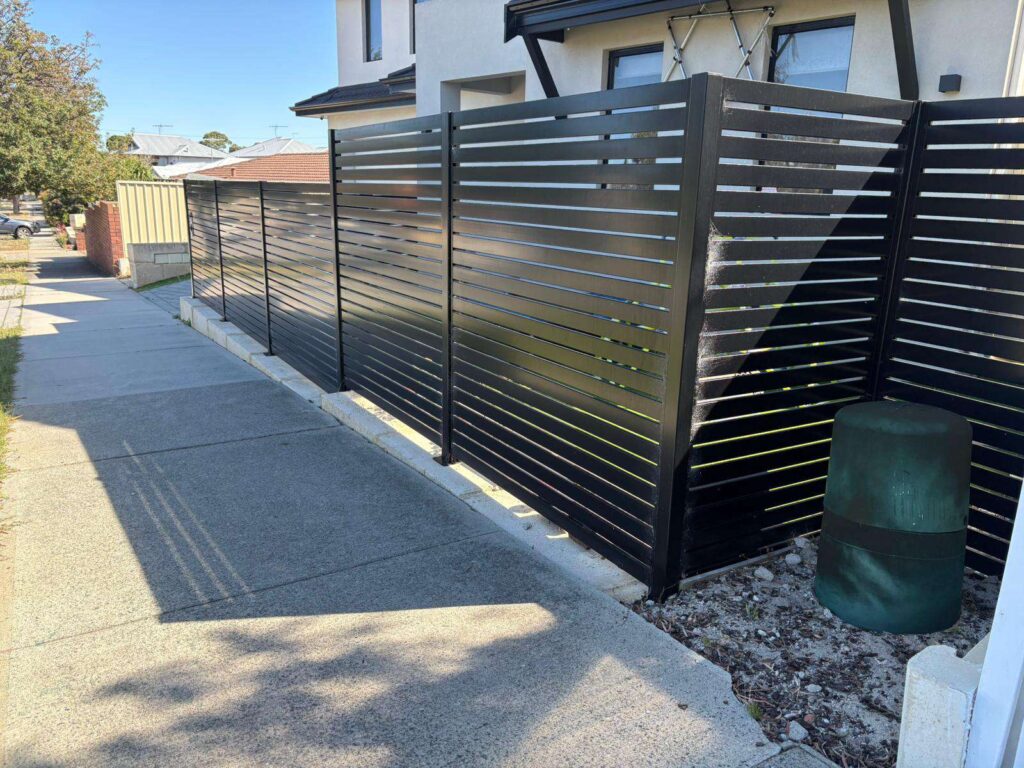
Installing a pool is exciting, but the safety barrier around it carries legal weight that many homeowners underestimate until they are deep into the permit process. Western Australia takes pool fencing seriously for good reason, and understanding the rules before you start prevents costly delays, failed inspections, and worse, a genuine safety risk to young children.
This guide walks through exactly what WA law requires for pool safety barriers, how compliance actually gets checked, what materials work best, and how to choose an installer who understands this specific category of fencing rather than treating it like standard boundary work.
In short, any private pool in Western Australia containing more than 300mm of water must have a compliant safety barrier at all times. That barrier needs a minimum height of 1.2 metres, gates that close and latch automatically, and no climbable objects nearby that could give a child access. Getting each of these details right the first time saves you from failed inspections and expensive rework later.
Why Pool Fencing Laws Exist
Drowning remains a leading cause of accidental death among young children in Western Australia, and most of these incidents happen in home swimming pools rather than public ones. That single fact drives every rule covered in this guide.
The current regulations trace back to a 2002 parliamentary report on swimming pool fencing, which recommended clearer guidance for pool owners navigating the law. Building and Energy, the state’s building regulator, later strengthened these rules further following an Ombudsman Western Australia investigation into child drowning deaths, which specifically flagged gaps in how safety barriers were enforced across different council areas.
Understanding this background matters because it explains why enforcement has become stricter over time rather than more relaxed, and why local councils take compliance inspections genuinely seriously.
The Core Legal Requirement
Under the Building Regulations 2012, every private swimming pool, spa, or portable pool holding more than 300mm of water requires a compliant safety barrier that restricts unsupervised access by young children, and only a local government can confirm whether a specific barrier actually meets compliance. This applies regardless of whether the pool is permanent, above ground, or an inflatable portable pool set up for summer. dmirs
Two separate sets of requirements exist depending on when your pool was installed or when the original building plans were submitted, since the regulations have been updated over time and older pools were sometimes assessed under earlier standards. If you are unsure which set of rules applies to your specific pool, your local council building department can clarify this before you plan any fencing work. commerce
Minimum Height and Barrier Design
A compliant pool safety barrier must stand at least 1.2 metres high, measured from the ground on the side away from the pool. This height requirement exists specifically to prevent young children from climbing over, and it applies consistently across the entire barrier, not just the sections directly bordering the water.
Design details matter just as much as height. Horizontal rails create potential footholds for a climbing child, so barrier design needs to avoid horizontal elements that could be used as steps. Gaps between vertical palings or slats also have strict maximum widths to prevent a small child from squeezing through, and gaps under the bottom rail face similar restrictions.
A fencing contractor experienced in pool safety work should be able to walk you through exactly how these design rules apply to whichever material you choose, whether that is Colorbond, aluminium slat fencing, or a mesh style barrier.
Self Closing and Self Latching Gates
Gate compliance causes more failed inspections than almost any other single element of pool fencing. Every gate in a compliant safety barrier must close automatically under its own weight or spring mechanism, and it must latch automatically as well, without requiring the user to manually secure it.
The latch release mechanism also needs to sit at a specific height and position that a young child cannot reach or operate, even if they manage to climb partway up the gate. This is a detail that experienced pool fencing installers check carefully during installation, since a slightly misaligned latch can cause an otherwise well built fence to fail inspection.
Propping a pool gate open, even briefly, undermines the entire barrier and is treated as a serious compliance breachsince pool gates are the most common access point a young child uses to gain unsupervised access into a pool area. Local governments have the power to issue infringement notices to owners who fail to maintain a compliant barrier, including situations where a gate is found propped open. commerce
Keeping the Area Around the Barrier Clear
Compliance does not stop once the fence itself is built correctly. Homeowners also need to keep the immediate area around the barrier clear of anything a child could use to climb over, including outdoor furniture, pot plants, barbecues, or garden features placed too close to the fence line.
This requirement often catches homeowners off guard during a compliance inspection, since it is easy to forget that landscaping decisions made months after installation can affect whether a previously compliant fence still passes. Keeping at least an arm’s length of clear space around the outside of the barrier is a simple habit that avoids this problem entirely.
Building Permits and Compliance Inspections
Most pool installations require a building permit that specifically covers the safety barrier, and this permit process typically runs alongside or shortly after the pool construction itself, since private swimming pools with water more than 300mm deep must have a compliant safety barrier before the permit process is considered complete. Full detail on how building permits apply to private pools and pool fences is available directly through the WA Government’s Rules for Pools and Spas guide, which remains the definitive resource for understanding these requirements in full. commerce
Once your barrier is installed, a compliance inspection confirms it meets every applicable standard before the pool can legally hold water. Your local council typically arranges this inspection, and it is worth asking your fencing contractor directly whether they handle scheduling this step or whether it falls to you to organise separately.
If you are planning a pool fencing project and want a team that understands these compliance requirements from the first conversation, reach out through the get a free quote page and we will walk you through exactly what your specific property needs.
Choosing the Right Material for Pool Fencing
Material choice for pool fencing balances compliance, durability, and appearance differently to standard boundary fencing. Colorbond steel works well for pool barriers thanks to its strength and complete privacy, and the specific compliance considerations for this application are covered in more depth on the Colorbond fencing page.
Aluminium slat fencing is another popular choice around pools, particularly for homeowners who want a more open feel with partial visibility rather than a solid barrier. Slat spacing still needs to meet the same anti climb requirements as any other pool barrier, and our aluminium slat fencing page covers how this works in practice.
Whichever material you choose, the specific product and installation approach for pool applications is covered directly on our pool safety fence page, which is worth reviewing before committing to a design.
What a Compliant Installation Actually Involves
A proper pool fencing installation starts with the same fundamentals as any quality fence, including correctly set posts and adequate concrete curing time. Pool applications add several extra layers on top of this, including precise height verification along the entire barrier run, careful gate hardware selection and alignment, and confirmation that no gaps or climbable elements exist anywhere along the barrier.
Experienced installers test gate operation repeatedly during installation, confirming the gate closes fully and latches correctly from multiple approach angles rather than just checking it once. This attention to detail is exactly what separates an installation that passes inspection on the first attempt from one that requires costly rework.
Portable and Above Ground Pools Follow the Same Rules
A common misconception among homeowners is that inflatable or portable pools fall outside these regulations because they are temporary. This is incorrect. Any pool holding more than 300mm of water, including portable and above ground pools, requires the same compliant safety barrier as a permanent in ground pool, and Building and Energy has specifically run public awareness campaigns reminding homeowners that portable pool safety barrier requirements apply just as strictly as they do for permanent pools. commerce
This catches many families out during summer when a portable pool goes up quickly without any fencing plan in place. If you are setting up a portable pool this season, it is worth checking your barrier requirements before filling it with water rather than after a council notice arrives.
Choosing a Contractor Who Understands Pool Compliance
Not every fencing contractor has deep experience with pool safety requirements specifically, and this is an area where that experience genuinely matters. Ask any contractor directly how many pool fencing projects they have completed and whether they can explain the specific height, gap, and gate requirements without needing to look them up.
A contractor confident in this area should also be upfront about who arranges the compliance inspection and what happens if the installation does not pass on the first attempt. Our about us page outlines our own background, and the gallery includes examples of completed pool fencing work you can review directly.
Frequently Asked Questions
How deep does a pool need to be before a safety barrier is legally required?
Any private pool, spa, or portable pool holding more than 300mm of water requires a compliant safety barrier under Western Australian law, regardless of whether the pool is permanent or temporary.
What is the minimum height for a pool safety barrier in Perth?
A compliant barrier must be at least 1.2 metres high, measured from the ground on the outside of the barrier, with no horizontal elements or gaps that could allow a child to climb over.
Do portable or inflatable pools need a fence in Western Australia?
Yes. Any pool holding more than 300mm of water requires the same compliant safety barrier as a permanent pool, and this applies to portable and above ground pools just as strictly.
Who checks whether my pool fence actually complies with the law?
Your local council carries out compliance inspections and is the only authority able to confirm whether a specific safety barrier meets the legal requirements.
Can I prop my pool gate open for convenience?
No. A propped open gate defeats the entire purpose of the safety barrier and is treated as a serious compliance breach that can result in enforcement action from your local council.
What happens if my pool fence fails a compliance inspection?
Your council will outline exactly what needs to change before the pool can be approved to hold water, which typically means the installer returning to correct the specific issue identified, whether that involves gate alignment, gap width, or barrier height.
Can I use Colorbond or aluminium fencing for my pool barrier?
Yes, both materials are commonly used for pool safety fencing provided the specific design meets height, gap, and gate requirements. An experienced installer will confirm which approach suits your chosen material.
Getting Started With a Compliant Pool Fence
Pool fencing carries real legal weight, and getting it right the first time protects both your family and your project timeline. Understanding height requirements, gate mechanisms, and the inspection process before work begins puts you in a far stronger position than discovering these details after a failed inspection.
If you are ready to install a compliant pool safety barrier
We handle pool fencing projects across Perth regularly and can walk you through every compliance requirement specific to your property before any work begins.