Hiring a fencing contractor feels straightforward until you start comparing quotes and realise every company sounds equally confident on the phone. Prices vary. Promises sound similar. And most homeowners have no real way to judge quality until the fence has been standing for a year or two.
This guide breaks down exactly what to look for before you hire a residential fencing contractor in Perth. You will learn which questions actually matter, which warning signs to take seriously, and how to compare quotes properly rather than just picking the lowest number.
In short a good residential fencing contractor in Perth will assess your property in person before quoting, provide a clear itemised price, hold proper licensing and insurance, back their work with a genuine warranty, and have a real local track record you can verify. The sections below cover each of these in detail and give you practical questions to ask along the way.
Start With a Proper Site Visit
A reliable contractor visits your property before giving you a price. Soil conditions shift dramatically across Perth suburbs, ranging from soft sand to firmer clay, and this directly affects how deep post footings need to go. Slope, access, tree roots, and underground services also change what a job actually requires.
Avoid any company willing to quote a fixed price over the phone without seeing your yard. They are guessing, not assessing. A proper site visit lets an experienced installer catch problems early, whether that means a steep driveway limiting equipment access or an old fence that needs removal before new posts can go in.
During this visit, ask what specifically shapes their price for your property. A contractor who explains their reasoning clearly is worth far more trust than one who simply hands over a number.
Insist on a Clear Itemised Quote
Once the site visit is done, the quote itself tells you a lot. A trustworthy contractor breaks the price down into materials, labour, post depth and concrete work, gate hardware, disposal of old fencing, and warranty terms.
A single lump sum with no explanation makes comparison shopping nearly impossible. It also makes it easy for a company to quietly cut corners you cannot see, such as using less concrete or setting posts shallower than they should.
Request a written breakdown from every company you contact through the get a free quote page. Comparing itemised quotes side by side reveals far more than comparing totals alone.
Confirm Licensing and Insurance Directly
Every legitimate fencing business in Western Australia should carry proper licensing and public liability insurance. Ask for this information upfront rather than assuming it exists.
Insurance protects you if something goes wrong during the job, whether that is accidental property damage or an injury on site. A contractor who hesitates or deflects when asked about this is signalling something worth taking seriously.
Save the confirmation in writing if possible. It costs nothing to ask and protects you if a dispute arises later.
Check for a Genuine Local Track Record
Local experience matters more in fencing than people often realise. Perth’s soil conditions, council permit requirements, and climate all differ from suburb to suburb, and a contractor who regularly works in your area already understands these patterns.
You can verify this by asking how many jobs they have completed nearby and requesting to see examples. Driving past a finished job in your own suburb tells you more than any online review ever could. Our about us page explains our own background, and the gallery shows completed work you can judge directly.
A company with no verifiable local history is a much bigger gamble, regardless of how polished their marketing looks.
Ask About Post Depth and Concrete Curing Time
This single question separates careful contractors from rushed ones more clearly than almost anything else. Posts need to be set to an appropriate depth for your specific soil and fence height, then left to cure properly in concrete before panels go on.
Skipping this step is one of the most common shortcuts in the industry. It is invisible on installation day and expensive within a year or two, once posts begin leaning or shifting.
A confident contractor explains their process without hesitation. Vague answers here are a clear warning sign.
Understand What Warranty Actually Covers
Two separate warranties apply to most fencing projects. The material itself, such as genuine Colorbond steel, carries a manufacturer warranty from BlueScope directly, and full detail on how that works sits on the official Colorbond warranty page. Your installer provides a separate workmanship warranty covering the installation itself.
A professional contractor explains both clearly and puts them in writing. A company offering no workmanship warranty, or only a few months of cover, is telling you something about how confident they are in their own work.
Ask specifically how a warranty claim would be handled if a problem showed up later. The answer reveals a lot about how seriously the company takes accountability.
Compare Material Options Honestly
A good contractor recommends materials based on your site and budget rather than pushing whatever is easiest for them to install. Colorbond suits most Perth homes thanks to its durability and low maintenance, and you can explore the options on the Colorbond fencing page.
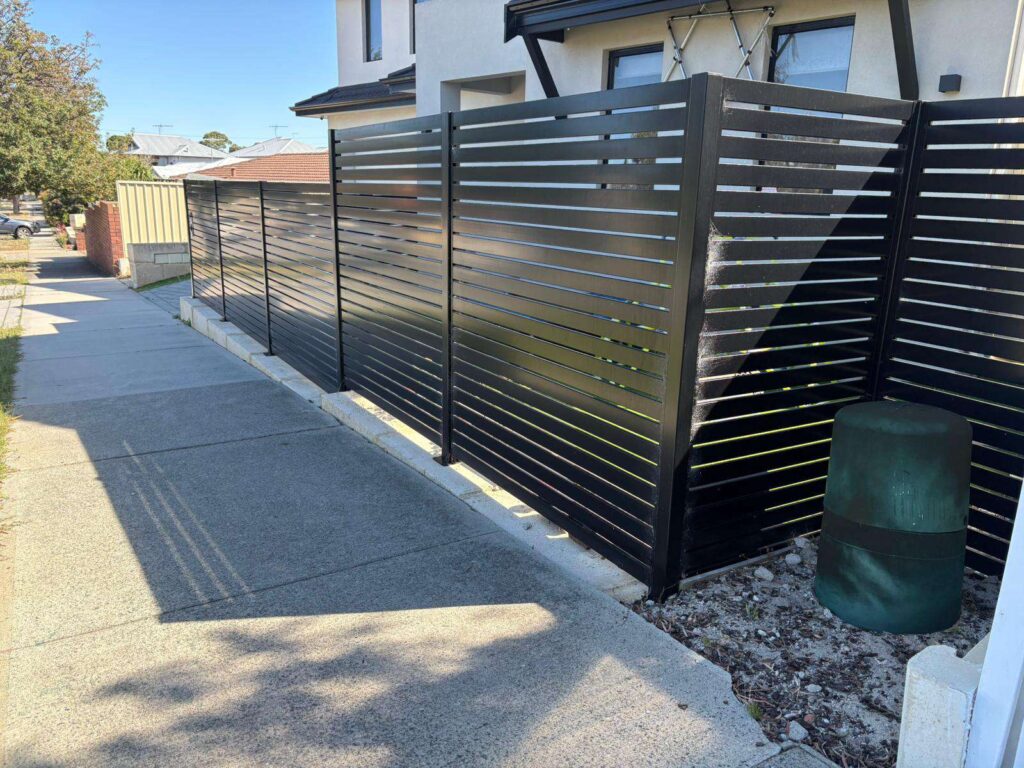
Timber, including pinelap styles, gives a warmer natural look at a lower upfront cost, though it needs more upkeep over time, covered in detail on the pinelap fencing page. Aluminium slat fencing works well for feature sections or pool surrounds, with more detail available on the aluminium slat fencing page.
A contractor who walks you through these trade offs honestly, rather than steering you toward one option regardless of fit, is worth trusting with the job.
Check Pool Fencing Compliance Knowledge
Projects involving a pool carry legal requirements beyond standard fencing. Western Australian regulations require any pool with more than three hundred millimetres of water to have a compliant safety barrier at least 1.2 metres high, with gates that close and latch automatically. Full detail sits in the WA Government’s official Rules for Pools and Spas guide.
A contractor experienced in this area should explain these requirements without being prompted and confirm exactly how your specific gate and barrier will meet them. Our pool safety fence page covers this category of work in more depth.
Non compliance can mean a failed inspection and costly rework, so this knowledge matters more than it might first appear.
If you are ready to compare a proper itemised quote against whatever else you have received, reach out through the get a free quote page and see the difference a thorough assessment makes.
Watch for Red Flags During the Sales Process
A few warning signs consistently point toward a poor experience later. Pressure to pay the full amount upfront before work starts is one of the clearest, since reputable contractors typically structure payment around project milestones.
No fixed business address, reluctance to provide references, and a quote given without ever seeing your property all belong on this list too. None of these signs guarantee a bad outcome on their own, but together they paint a picture worth taking seriously.
Trust your instincts here. If a company avoids straightforward questions, that avoidance is itself useful information.
Ask About Communication After Installation
The clearest test of professionalism happens after the invoice is paid. Does the company stay responsive if you notice something off weeks later, or does communication quietly stop once the job is technically finished?
Reliable contractors treat the relationship as ongoing rather than transactional, particularly at a local level where reputation genuinely affects future business. Ask directly how they handle post installation concerns before you sign anything.
This single question often reveals more about a company’s true standards than anything discussed during the initial sales conversation.
Bringing It All Together
Choosing a residential fencing contractor in Perth comes down to verifying a handful of concrete things rather than relying on gut feeling alone. A proper site visit, an itemised quote, confirmed licensing and insurance, a real local track record, clear warranty terms, and honest material advice together paint an accurate picture of how a company actually operates.
Taking the time to check these details before signing protects you from the costly repairs and disputes that follow a poorly built fence. It also means finding a contractor you can genuinely rely on if anything needs attention down the track.
Ready to work with a Perth team that checks every one of these boxes? Get in touch with Fencing On A Budget today, and we will walk you through our process, answer every question covered here directly, and arrange a proper site assessment for your property.
Frequently Asked Questions
What is the most important thing to check before hiring a fencing contractor?
A proper site visit before quoting matters most, since it directly affects post depth, material choice, and overall pricing accuracy for your specific property.
How do I know if a fencing quote is fair?
Compare itemised quotes that clearly separate materials, labour, post depth and concrete work, gate hardware, and disposal. A single lump sum figure makes fair comparison very difficult.
Should I ask to see a contractor’s licensing and insurance?
Yes. Reputable contractors provide this information without hesitation, and having it confirmed in writing protects you if a dispute arises later.
Why does post depth matter so much in Perth specifically?
Perth’s sandy soil in many suburbs requires deeper or wider footings than firmer clay based ground elsewhere. Skipping this step is a common cause of leaning or shifting fences within a year or two.
What is the difference between a manufacturer warranty and a workmanship warranty?
A manufacturer warranty, such as the one BlueScope provides for genuine Colorbond steel, covers defects in the material itself. A workmanship warranty comes from your installer and covers issues caused by the installation, such as posts shifting or panels coming loose.
Do I need council approval for a residential fence in Perth?
It depends on fence height, location, and whether pool safety fencing is involved. Your local council can confirm exact requirements, and an experienced contractor should be able to guide you through the process.
What should I do if a contractor pressures me to pay in full before work starts?
Treat this as a warning sign. Reputable contractors typically structure payment around project milestones rather than demanding full payment upfront.